
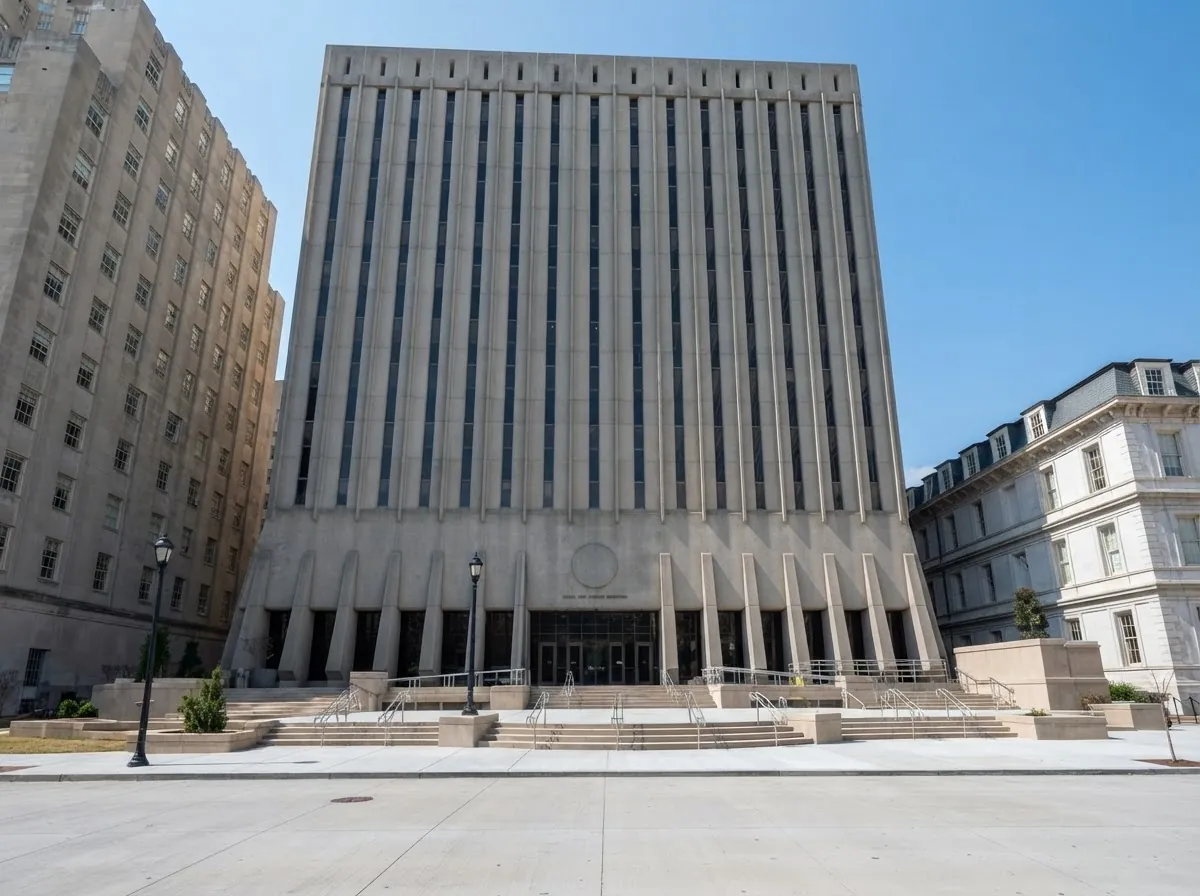
Wake County court records in North Carolina are maintained by the Clerk of the Superior Court and are accessible through online tools, official court portals, and directly at the clerk's office. WakeCourt.us is a convenient resource for finding publicly available information about court records in this county. Additionally, you can use the North Carolina court system portal, call, or visit the clerk's office in person.
Wake Court System Overview
Wake County is part of the 10th Judicial District of North Carolina. The county's court system consists of the Superior Court and the District Court, which together serve one of the most populous counties in the state. The District Court handles misdemeanor cases, minor civil disputes, family law, and traffic violations. Magistrates are judicial officials who work around the clock, issuing warrants, setting bail, and administering oaths.
The main courthouse is located at:
Courts Serving Wake
Residents of the county are served by several courts with varying levels of jurisdiction.
| Court | Address and Contacts |
|---|---|
| Wake County Superior Court | 316 Fayetteville Street, Raleigh, NC 27601 |
| Wake County District Court | 316 Fayetteville Street, Raleigh, NC 27601 |
| Wake County Magistrate's Office | 301 S. McDowell Street, Raleigh, NC 27601 |
| U.S. District Court, Eastern District of North Carolina | 310 New Bern Avenue, Raleigh, NC 27601 |
| U.S. Bankruptcy Court, Eastern District of North Carolina | 300 Fayetteville Street, Suite 209, Raleigh, NC 27601 |
Some municipalities in the county (such as Raleigh, Cary) do not have separate municipal courts — city ordinance violations are usually handled by the District Court.
What Types of Cases Wake Courts Hear
The county courts handle a wide range of cases. Here is a general list:
- Criminal cases: felonies, misdemeanors, infractions
- Civil disputes: claims of any amount, small claims
- Family law: divorce, custody, child support, protective orders, paternity
- Probate matters: estate administration, guardianship, conservatorship
- Juvenile cases: juvenile offenses, child protection, adoption
- Traffic violations and DWI cases
District Court Cases in Wake
The District Court in this county is the court of general jurisdiction for cases that do not fall under the exclusive jurisdiction of the Superior Court. A District Court judge presides over misdemeanor hearings, hears civil disputes with claims up to $25,000, and all family law cases, including divorce and child custody.
Felony cases start in the District Court: a magistrate or judge conducts a probable cause hearing, after which the case is transferred to the Superior Court for trial. Appeals from magistrate decisions also go to the District Court. Cases are assigned to judges according to an internal schedule approved by the county's chief judge.
Magistrate Court Cases in Wake
County magistrates work around the clock and play an important role in the initial stages of many cases. They issue arrest and search warrants, set bail, conduct preliminary hearings, and administer oaths for written statements.
Magistrates hear small civil claims up to $10,000 in accordance with North Carolina law. Traffic violations, including speeding and traffic infractions, also start at the magistrate level. DWI cases go through the magistrate for initial release conditions. Given the high workload — Wake is one of the largest counties in the state — magistrates often specialize in certain categories of cases according to a schedule.
Family Law, Probate, and Juvenile Matters in Wake
Family cases in the county are heard by the District Court. This includes divorces, determining custody and visitation, child support, domestic violence protective orders, establishing paternity, and terminating parental rights. To file a petition, you need to contact the clerk of court's office.
Probate matters are handled by a separate division — the Estates Division of the Clerk of Superior Court's office. This division deals with estate administration, appointing guardians and conservators.
Juvenile cases are heard by the District Court in a closed setting. Juvenile case records are confidential under North Carolina law. The Juvenile Court Counselor's Office coordinates juvenile offense cases.
How Cases Move Through the Wake Court System
The general flow of a case through the county courts is as follows:
- Case initiation. A criminal case begins with a complaint or arrest warrant. A civil case starts with the filing of a complaint with the clerk's office. Family and probate cases are initiated by petition.
- Assignment to judges. The clerk registers the case and assigns it a number. A judge is appointed according to the case category and internal schedule.
- Initial hearing. In criminal cases — arraignment, where the defendant is read the charges. In civil cases — scheduling conference to determine the process timeline.
- Pre-trial phase. Parties exchange evidence (discovery), file motions. In criminal cases, plea bargaining is possible.
- Trial. A jury or judge renders a verdict. In civil cases, settlement or default judgment is possible.
- Post-decision. Sentencing, filing an appeal, or enforcing the court's decision.
Court Administration, Local Rules, and Public Access in Wake
Court administration in the county is carried out by the Chief District Court Judge in conjunction with the Trial Court Administrator. These officials approve hearing schedules, assign cases, and ensure procedural compliance.
Local rules of the 10th Judicial District regulate the filing of documents, conduct of hearings, and other procedural matters. They can be found on the North Carolina court system website.
Most court records in North Carolina are public according to Chapter 132 General Statutes (public records law). Exceptions include:
- Juvenile case records
- Sealed or expunged records
- Grand jury records
- Certain domestic violence case records
Hearings are generally open to the public. Some sessions are held remotely via the Cisco WebEx platform — check with the clerk's office if this option is available for a specific hearing.
Court Records and Related Court Resources in Wake
Below are key resources for finding court records and related information.
- Online court case search. The eCourts portal allows searching for cases by party name or case number. This is the primary tool for checking case status.
- Hearing schedules. The current court hearing calendar is published on the state court system's website.
- Forms and self-help resources. The Help Topics section contains forms, instructions, and explanations for self-represented individuals.
- Clerk of court's office. For certified copies or public records requests, contact the Clerk of Superior Court at the address listed above. Certified copies usually require a fee.
- Inmate search. The NC Department of Adult Correction provides an online search by inmate name.
- Sex offender registry. The NC Sex Offender Registry is a database of the State Bureau of Investigation.
- WakeCourt.us — an additional resource for navigating publicly available court records in the county.